Author: mahmoudaldebei

  • The River Thames as a Place-Maker

    Enquiry


    For my A1 project, my core investigation centres around the River Thames, specifically focusing on the South Bank and Millennium Bridge area. I am exploring how the river acts as a primary place-maker that bridges historical London architecture (such as St. Paul’s Cathedral) with contemporary urban expansions. Rather than viewing the river merely as a geographical divider, this project investigates it as a dynamic corridor of cultural and architectural dialogue. This enquiry directly aligns with my interest in urban spatial photography and architectural context, providing a meaningful foundation for analyzing how heritage and modernity interact within public spaces.


    Research


    To inform my investigation, I engaged with three main sources: visual fieldwork photography along the river, the architectural documentary approach of photographer Andreas Gursky, and an academic article examining urban waterfronts. Additionally, I utilized Microsoft Copilot to compare human versus AI text summarization, evaluating how digital tools analyze architectural discourse compared to critical human observation. This combined research methodology allows me to ground my visual observations within critical contextual analysis, ensuring that my creative practice is directly supported by academic and artistic references.


    Making


    My practical methodology combines on-site photographic documentation with contextual spatial analysis. I focus on capturing structural framing, reflections, scale contrasts, and movement along the riverbank. By documenting how historical monuments like St. Paul’s interact visually with modern structures across the water, I aim to create a cohesive visual narrative exploring identity, heritage, and spatial transformation. This practical process allows me to record the physical environment while developing a distinct artistic approach to architectural photography.


    Experimentation


    Moving into the upcoming A2 phase, I intend to experiment with varying exposure techniques, alternative framing perspectives, and digital manipulation of reflections and architectural lines. I hope to discover how visual contrast can convey the fluidity between past and present urban design along the Thames. These initial experiments will help me determine which formal techniques best express the concept of the river as a place-maker, paving the way for further physical and analytical outcomes in the next development stage.


    References (Harvard Style)
    Galassi, P. (2001) Andreas Gursky. New York: Museum of Modern Art.
    South Bank London (2025) Architecture and History along the Thames. Available at: https://www.southbanklondon.com (Accessed: November 2026).
  • Visual Exploration: The River Thames as a Place-Maker

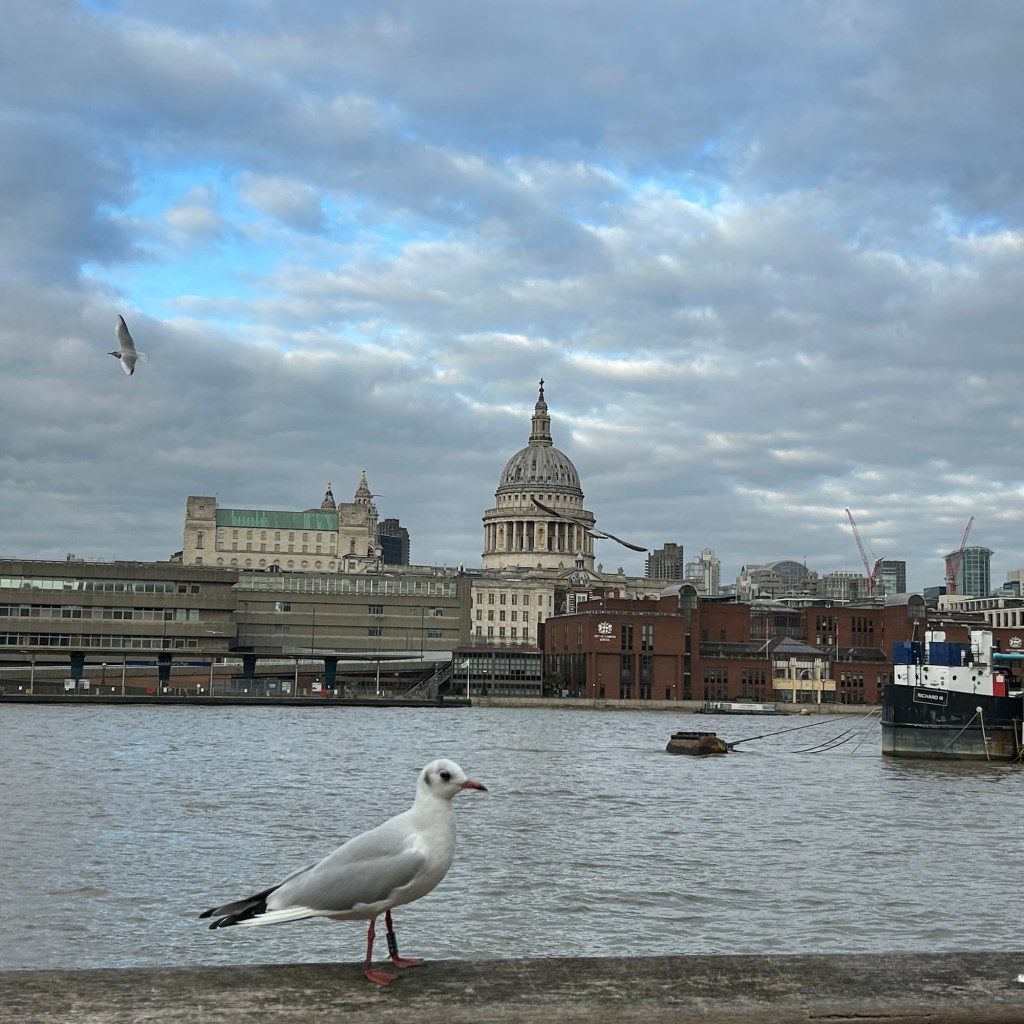
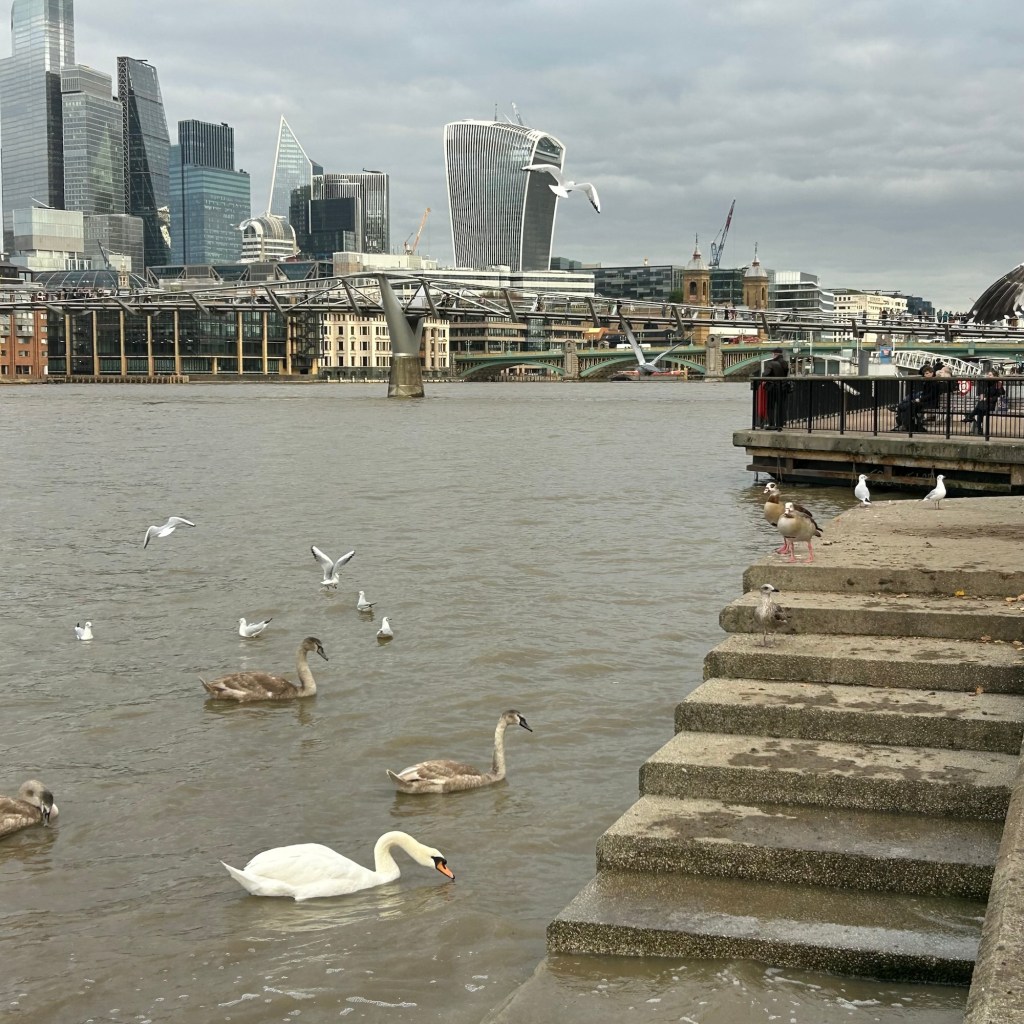
    As part of my A1 contextual research, I conducted fieldwork along the South Bank of the River Thames, focusing on the area surrounding the Millennium Bridge and St. Paul’s Cathedral. My goal was to explore the river not just as a geographical boundary, but as an active place-maker that shapes London’s visual and spatial identity.

    During this session, I captured various angles documenting the contrast between historical architectural anchors (such as St. Paul’s) and contemporary structures. Below are two key selected images that represent my core creative direction and highlight the kinetic contrast along the riverbank, guiding my upcoming A2 experimentation phase.

    Sources & Research References

    1. Visual Reference: On-site fieldwork
      photography documenting St. Paul’s Cathedral and the Millennium Bridge.
    2. Creative Practitioner: Andreas Gursky – exploring scale and structural repetition in architectural and urban environments.
    3. Academic Article: Urban Space and the Tidal River – examining the cultural and spatial role of urban waterfronts.

    Copilot Al Summary Comparison

    • My Manual Summary: The article highlights how the River Thames acts as a dynamic spatial boundary that influences surrounding architecture and public interaction over time.
    • Copilot Al Prompt: iSummarize the key architectural arguments of the article regarding urban waterfronts.”
    • Copilot Al Response: Copilot highlighted that rivers structure urban mobility, frame heritage sites, and act as catalyst areas for modern architectural developments.
    • Reflection & Comparison: Both summaries identified the river as an architectural catalyst.
      However, Copilot provided a broader structural overview, whereas my manual summary focused more on spatial experience and historical continuity.
  • Reflection on Photography: “Why Everything is a Remix”

    in the contemporary creative landscape, the idea that “Everything is a remix” resonates deeply with my understanding of photography and visual art.No piece of work exists in a vacuum. As photographers, every image we capture, frame, or edit is heavily influenced by the visual culture surrounding us-from historic art movements and classic photography masters to contemporary media and our own lived experiences.

    When we hold a camera, we are not creating reality from nothing; rather, we are selecting, reinterpreting, and rearranging existing elements of the world. The framing techniques, lighting choices, and color palettes we use are visual codes that have been developed and refined over generations. Striving for absolute “originality”—in the sense of producing something entirely unprecedented—is an impossible standard. Instead, true artistic expression lies in how effectively a photographer can take these shared influences and remix them through a distinct, personal perspective.

    This process of remixing does not diminish the value or authenticity of the work. On the contrary, it connects individual creative output to a broader cultural conversation. For example, two photographers using the same composition technique can produce vastly different emotional reactions simply because of their personal intent and framing choices. The skill is not in inventing a completely new visual language, but in composing existing elements in a way that feels meaningful and fresh to the viewer.

    Furthermore, in an era where digital technology and AI make visual manipulation seamless, embracing the concept of the “remix” encourages us to focus on human intent and emotional resonance rather than superficial novelty. Ultimately, as a photography student, accepting that “everything is a remix” releases the pressure of trying to be completely original, allowing me to focus on creating sincere, authentic work that reflects my personal vision.

  • Design Review: The Polaroid 600 Camera and the Evolution of Instant Photography

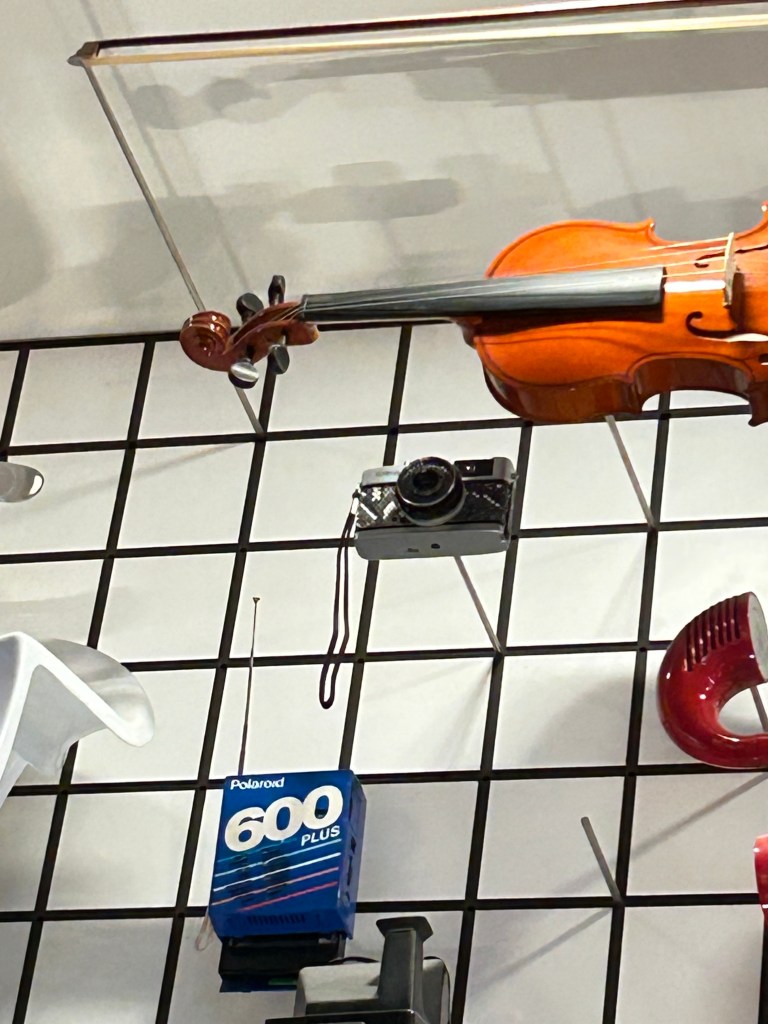
    During my visit to The Design Museum in London, I focused on the analogue camera display within the permanent exhibition, Designer Maker User. Among the most influential objects on display is the Polaroid 600 camera, shown alongside its iconic instant film pack. Launched in the early 1980s by the Polaroid Corporation, this object represents a pivotal moment in the history of visual culture and industrial design, bridging the gap between traditional mechanical photography and the desire for immediate visual gratification.

    The Polaroid 600 is an exemplary model of user-centered design. Built with a durable plastic housing, simple boxy silhouette, and a distinctive pop-up flash unit, the camera was designed for accessibility rather than technical complexity. Unlike traditional 35mm cameras of its era—which required manual film winding and darkroom processing—the Polaroid 600 integrated a chemical processing system directly inside the film pack. Users could capture an image and watch the photograph physically develop within minutes. The design prioritised physical interaction and simplicity: a single shutter button, a basic light/dark slider, and an ergonomic viewfinder made photography intuitive for non-professionals.

    From a cultural perspective, the Polaroid 600 fundamentally changed how people interacted with images. It democraticized photography by making image production instant and personal. Long before the invention of digital displays or social media platforms, instant cameras introduced the concept of the “instant visual memory.” Photos were no longer confined to formal family albums; they became physical objects shared immediately among friends. This sense of tangible immediacy gave the Polaroid a unique aesthetic identity—characterised by square white borders and saturated color tones—that continues to influence modern digital photo filters today.

    Examining the Polaroid 600 offers valuable insights for today’s photographic industry. As the market shifts toward digital speed and Artificial Intelligence (AI) automation, the physical Polaroid serves as a reminder of the core purpose of photography: storytelling and personal expression. While AI algorithms can generate or edit images instantly, they lack the physical authenticity and unpredictability of analogue film. The revival of instant photography among contemporary creatives highlights a growing demand for tactile, genuine visual experiences in an increasingly digital world.

    In conclusion, the Polaroid 600 is much more than a vintage consumer electronic; it is a milestone in design history that transformed photography from a specialized craft into a dynamic social activity. Its inclusion in The Design Museum highlights its lasting legacy in visual communications, demonstrating that good design seamlessly combines technical innovation with human emotion.

    This image has an empty alt attribute; its file name is img_1811.jpeg
  • The History of the Camera

    The Camera is a tool used to take pictures. It started long ago with a simple idea called Camera Obscure by Ibn al-Haytham. Later, in 1826, Joseph Nicéphore Niépce made the first real photo.Today, in the 21t century, cameras are very important because the help us share memories, and create visual content every day. From old wooden boxes to smart phones, cameras changed our world.

    The first camera were big wooden boxes with glass lines. they were heavy and hard to move. later, it was small, cheap, and and made of simple cardboard and leather. Today, modern digital cameras are made of light metal and plastic. Instead of using film, they use digital sensors to save pictures as files. the way cameras are made changed from hand-made wooden boxes to factory-made electronic devices. the shape also changed from a heavy box to a small tool that fits in your pocket or phone.

    In the past, only rich people, artists, and scientists used cameras because they were expensive and hard to use. Today, almost everyone has a camera in their phone. Photographers use professional cameras for news, fashion, and ads. Everyday people use cameras to capture daily life and share photos on social media.

    According to consumer theory, cheap and easy cameras changed how people act. In the past, people only looked at images in books or newspapers. Now, everyone creates their own images. People do not just visit places; they take photos to show their lives online. Visual images are now more important than text for communication.

    The design of the camera is a big success. It changed from a slow scientific tool into an easy everyday object. It adapted very well to new digital technology over the last two hundred years. The big use of social media and digital photos today proves that the camera is one of the most useful inventions in modern history.

    References

    Gustavson, T. (2011) Camera: A History of Photography from Daguerreotype to Digital. New York: Sterling Innovation.

    Hirsch, R. (2017) Seizing the Light: A Social & Aesthetic History of Photography. 3rd edn. London: Routledge.