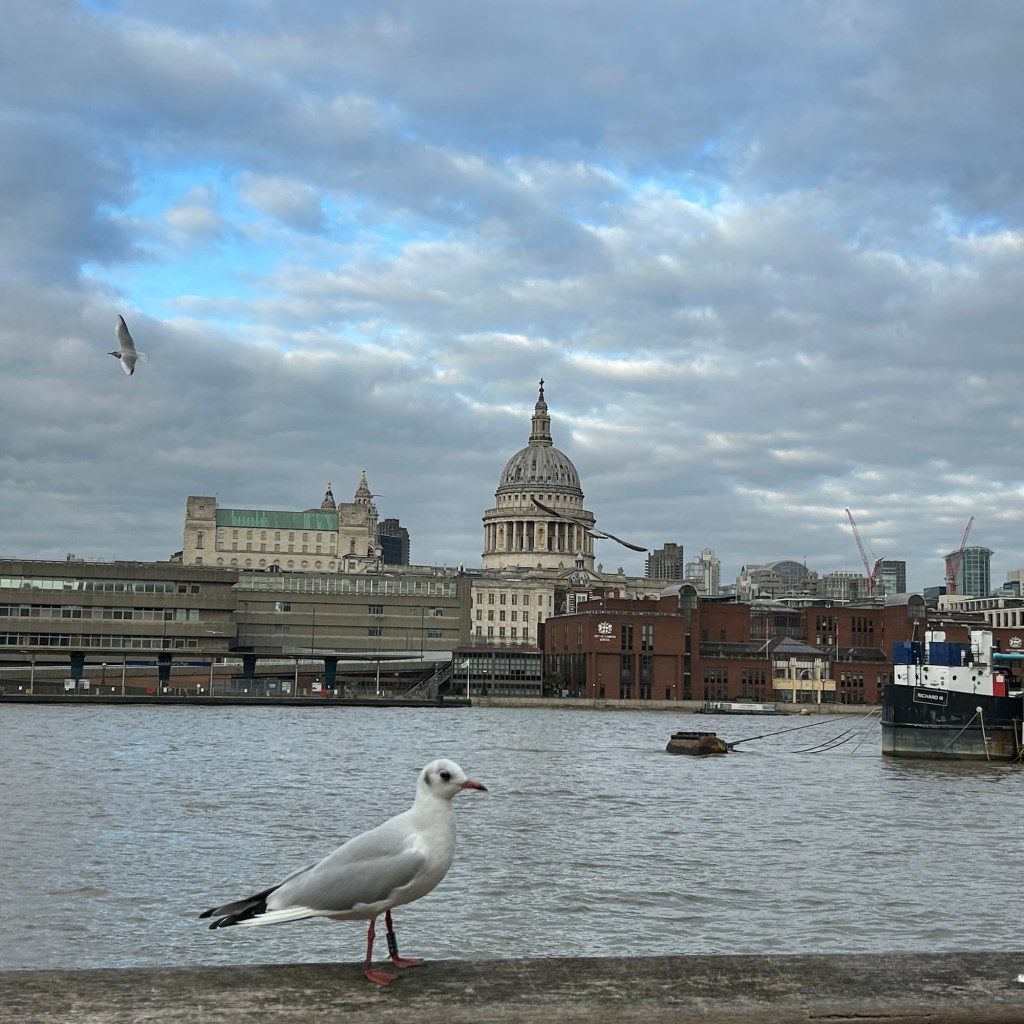
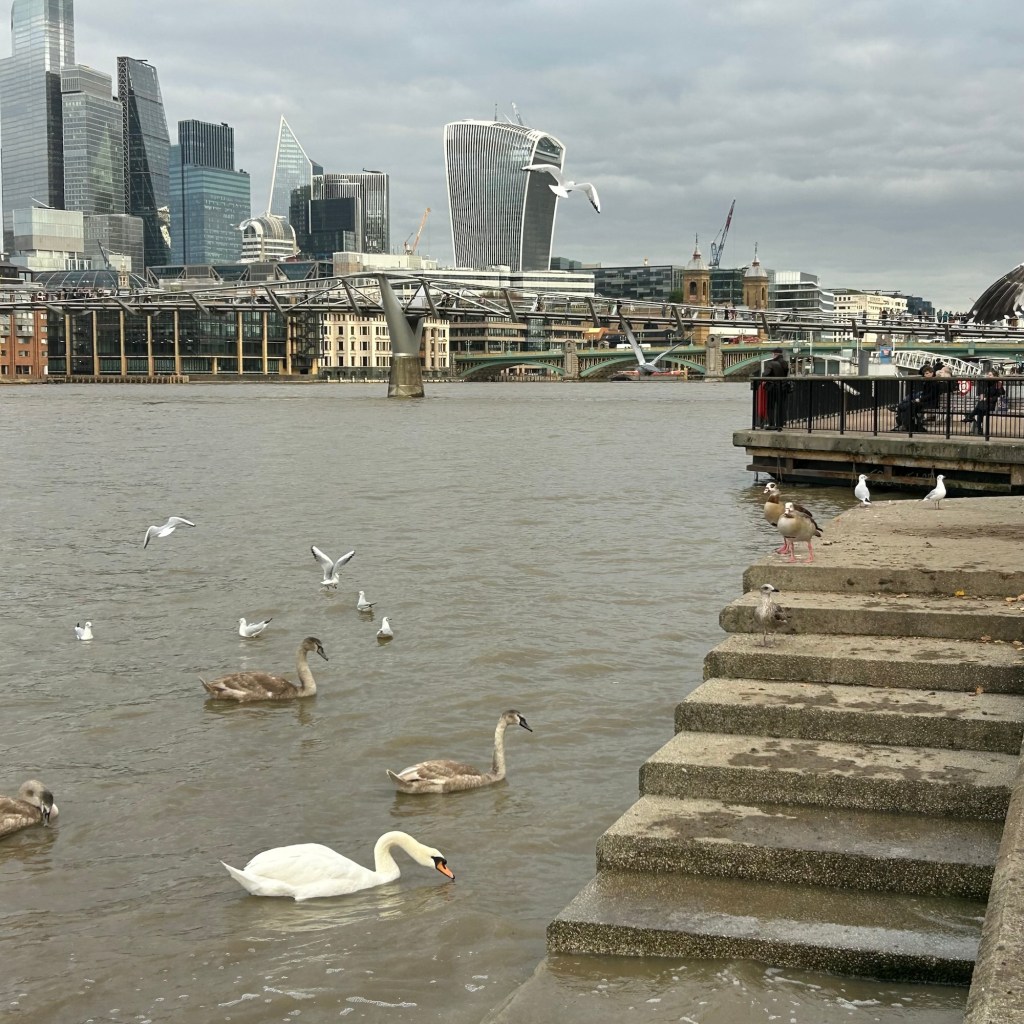
As part of my A1 contextual research, I conducted fieldwork along the South Bank of the River Thames, focusing on the area surrounding the Millennium Bridge and St. Paul’s Cathedral. My goal was to explore the river not just as a geographical boundary, but as an active place-maker that shapes London’s visual and spatial identity.
During this session, I captured various angles documenting the contrast between historical architectural anchors (such as St. Paul’s) and contemporary structures. Below are two key selected images that represent my core creative direction and highlight the kinetic contrast along the riverbank, guiding my upcoming A2 experimentation phase.
Sources & Research References
- Visual Reference: On-site fieldwork
photography documenting St. Paul’s Cathedral and the Millennium Bridge. - Creative Practitioner: Andreas Gursky – exploring scale and structural repetition in architectural and urban environments.
- Academic Article: Urban Space and the Tidal River – examining the cultural and spatial role of urban waterfronts.
Copilot Al Summary Comparison
- My Manual Summary: The article highlights how the River Thames acts as a dynamic spatial boundary that influences surrounding architecture and public interaction over time.
- Copilot Al Prompt: iSummarize the key architectural arguments of the article regarding urban waterfronts.”
- Copilot Al Response: Copilot highlighted that rivers structure urban mobility, frame heritage sites, and act as catalyst areas for modern architectural developments.
- Reflection & Comparison: Both summaries identified the river as an architectural catalyst.
However, Copilot provided a broader structural overview, whereas my manual summary focused more on spatial experience and historical continuity.


Leave a Reply